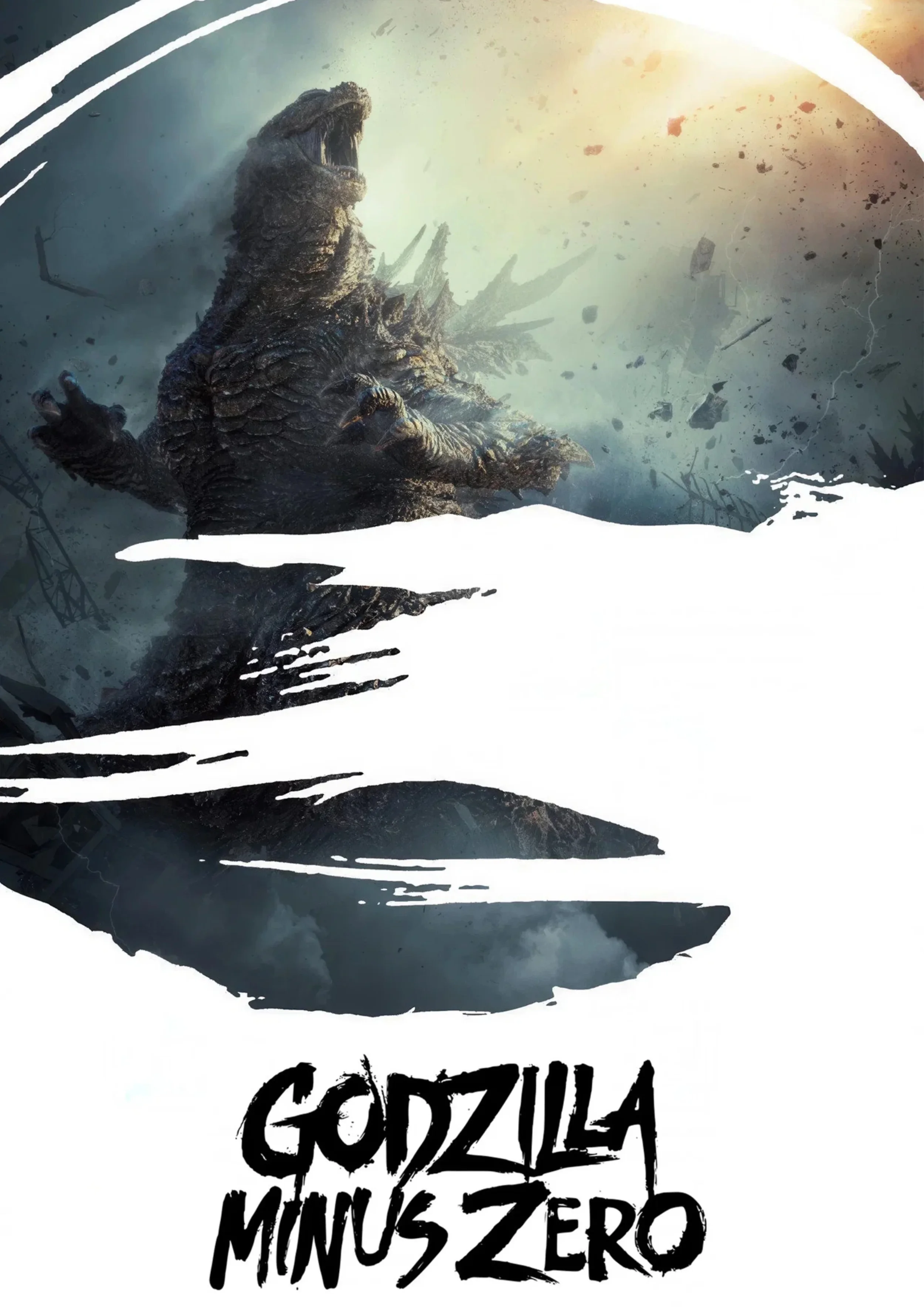
Synopsis:
It’s been two years since Godzilla ravaged a war-torn Japan. Ever since then, the country has struggled to rebuild under difficult conditions. Just when they thought peace was achievable, a new monstrous threat known as Ghidorah emerges.
Review:
With Godzilla Minus One, director Takashi Yamazaki gave Godzilla new life. It provided a well-structured story with sympathetic characters.
For this, and many other reasons, audiences anticipated its sequel. Similar to the first, Minus Zero includes well-realized visual effects and an intense musical score by Naoki Satō.
Whilst these are positives, Minus Zero’s plot and characters are less memorable and focused. This leaves viewers with a good film, even if it feels less important than Minus One.
Characters:
Many of the film’s character interactions focus far more on melodrama this time around.
Take some of the interactions with Kōichi Shikishima (Ryunosuke Kamiki) and his wife, Noriko (Minami Hamabe).
Noriko makes a decision later on in the film that Kōichi is unaware of. He later finds out, afraid that she’s putting her life at risk.
Though their motives are understandable, the film leans too much into overacted melodrama. This leaves you with a scene that, whilst important, drags on for longer than necessary.
This also applies to several scenes with Kōichi and Noriko’s daughter, Akiko (Sae Nagatani). Whilst they come across as heartfelt at times, much of it devolves into noise.
Saying that, Akiko is put in very difficult situations, which makes her reactions genuine. Still, the film should have spent more time giving Kōichi a worthy follow-up arc from the first film.
He spends much of Minus Zero’s runtime being a background support character. In fact, Noriko feels far more important to the film’s central narrative than he does.
Without revealing too much, she now has a connection to Godzilla due to Minus One’s events. Though it comes across as far-fetched, it’s a unique idea.
Other side characters also receive good development. These include the former naval technical officer Kenji Noda (Hidetaka Yoshioka) and biologist Kanji Murakami (Min Tanaka).
Hidetaka Yoshioka is given more material as Kenji Noda in this film, which is appreciated. He tackles guilt brought upon by mistakes from his past and not repeating them in the present.
Min Tanaka, who portrays Kanji Murakami, receives the most personal motivation of the film. Being a survivor of Hiroshima, he seeks revenge against those who caused him pain.
There’s even a harrowing scene where he imagines Godzilla firing his heat ray at New York City.
In an instant, its citizens are vaporized in a horrific display of power. It’s one of the few scenes in the film that earns its R rating.
It then cuts to Murakami laughing in a very maniacal way. He soon realizes what’s staring back at him in the mirror and stops.
As a whole, this scene presents a unique perspective. Despite that, ending it with almost cartoonish laughter diminishes its impact.
This is also the case with the film’s story. It spends so much time setting up events rather than moving forward with haste.
Story:
While the film starts well in displaying Ghidorah’s ferocious, animalistic nature, the story can stumble from there.
Minus Zero spends much of its first half in rooms with scientists and officials analysing charts to determine how to defeat Ghidorah.
Whilst it’s interesting to see strategies being implemented, the film spends too much time on it.
Some of the more melodramatic scenes can also affect the pacing. Because of this, the film grinds to a halt.
In fact, it’s not until the second half that the plot becomes more interesting. Once Ghidorah becomes King Ghidorah, and Godzilla returns, that’s when the pieces come together.
Action:
As expected, this film’s monster sequences are its main highlights. One of the more intense ones is when Kōichi and several other pilots encounter Ghidorah.
Each lightning blast from Ghidorah heightens the tension, as the pilots scramble under the pressure. This culminates in a scene in which Ghidorah evolves and becomes King Ghidorah.
King Ghidorah’s gold-plated design is menacing, made more terrifying through his displays of power. In this film, Ghidorah can fire a gravity beam, using it to levitate entire towns.
It makes for a very creative visual, even using it against Godzilla in their final battle. Speaking of Godzilla, its presence in the film is minimal.
Godzilla has even less screentime than in Minus One, though his appearance is still imposing.
Minus Zero’s final battle between the two is brutal. Although the increased brutality is appreciated, the encounter is very short.
It features a few moves between the two, which certain Godzilla enthusiasts may find disappointing.
Still, the scale of the monsters is impressive due to a more effective use of the film’s budget. This also leads to improved visual effects.
Visuals:
With an increased budget, this makes the monsters’ movements appear more natural.
King Ghidorah’s flying sequences are believable. Godzilla’s heavy stomps also carry increased weight.
Minus Zero’s depictions of war-torn Japan are just as harrowing as the first film. Each one is captured with an unmistakable grit, capturing the dire situation to good effect.
Though its visuals are improved, the final battle’s location lacks personality. It’s also depicted in a dull way, despite the brutal action on display.
Still, it makes sense for the context of the film, so it’s not a major issue. Once again, Naoki Satō gives audiences an intense musical score that complements the film.
Soundtrack:
As with the first, Naoki Satō gives personality to his music. This is present with several tracks, one of which is titled “Godzilla-0.0 Eclipse.”
This one plays whenever Ghidorah’s on screen, creating a chilling, siren-type sound. It fits the ominous terror of the creature and its unrelenting nature.
Also present is Godzilla’s theme, titled “Godzilla-0.0 Godzilla Suite.” Similar to the first, this theme is very fast-paced and exciting.
It’s also used at a pivotal point in the film where Godzilla and King Ghidorah face off. This makes their encounter more intense, even if the fight itself is too short.
These tracks are the standouts, giving the film much-needed weight.
Still, many of the tracks are reused from Minus One. Some viewers may want more variety, though it’s a strong effort by Naoki nonetheless.
Conclusion:
In conclusion, Minus Zero is at its best when it’s showcasing its improved visuals and scale.
Godzilla and King Ghidorah’s movements are believable, with a distinct sense of weight and personality. This film’s action is also intense, with many standout moments.
Naoki Satō’s score also helps in bringing these monsters to life. Each of his tracks for them gives them more personality than the characters.
Minus Zero’s character and story can stumble when it focuses too much on melodrama.
Whilst the motivations behind these scenes are believable, they drag on too much.
Kōichi also feels less important as a character, being relegated to the background. Its characters, such as Noriko, Kenji Noda, and Kanji Murakami, are more important.
Each one of them has a distinct motive throughout. This is made more believable through the film’s R rating. Saying that, some of these scenes are also melodramatic, which affects the story’s pacing.
Overall, Minus Zero is a good follow-up sequel that attempts to juggle too much. Still, those looking for improved visuals and scale should appreciate what’s on offer here.
Sam’s Action Reaction score:
Characters - 7/10
Story - 6.5/10
Action - 8/10
Visuals - 8/10
Soundtrack - 8/10
Overall score: 7.5 out of 10