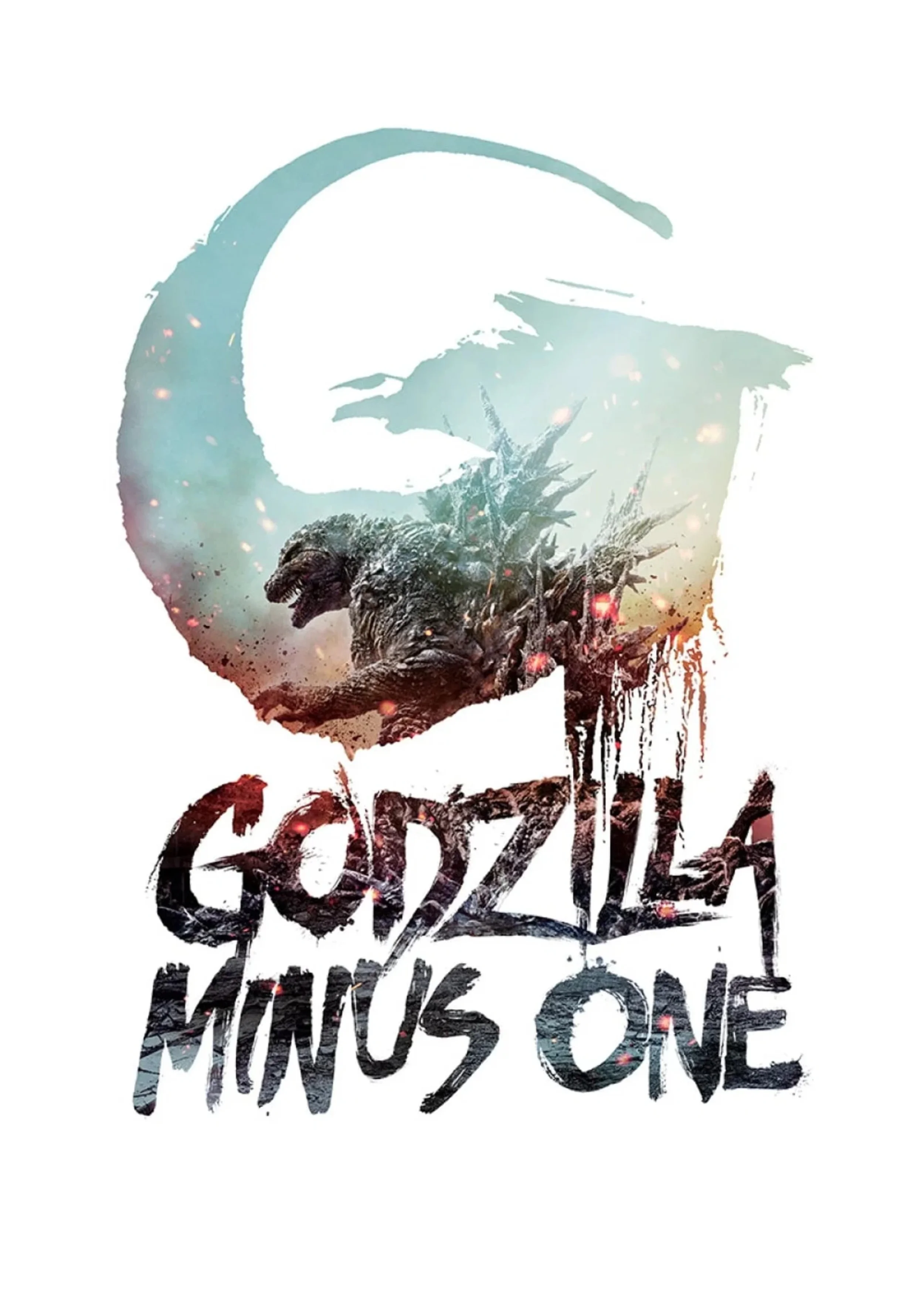
Synopsis:
In post-WWII Japan, a kamikaze pilot, Koichi Shikishima (Ryunosuke Kamiki), seeks redemption after abandoning his post. His redemption may come when he has a chance to defeat the monstrous creature known as Godzilla.
Context and general thoughts:
It's obvious that Legendary Entertainment and Warner Bros Godzilla films’ main focus was on spectacle. In contrast, Minus One’s human approach is refreshing.
Director Takashi Yamazaki brings Godzilla back to its Japanese roots.
He does this with refined visual effects, tension, and a grounded human-focused narrative.
This is no more apparent than with the film’s main protagonist, Koichi Shikishima.
Characters:
Minus One excels at showcasing how guilt over past mistakes affected Koichi. This first comes into focus on Godzilla’s attack on Odo Island.
As Godzilla massacres the island’s crew, Koichi is ordered to mount the gun on his aircraft. When Godzilla appears in his sights, he freezes.
As a result of his inaction, all personnel on the island, except for a mechanic, Sosaku Tachibana (Munetaka Aoki), perish.
Awakening from the aftermath, Koichi finds a sea of bodies. It’s a harrowing discovery, one that haunts Koichi for much of the film’s runtime.
His perspective on life soon changes when he meets a lone woman, Noriko Oishi (Minami Hamabe). She also has a child named Akiko, one she adopted.
With the support of a local woman, Sumiko Ota (Sakura Ando), they learn to care for the child as if it were their own.
It’s in these scenes where Koichi begins to restore pieces of his humanity that he once thought lost.
Despite that, there are still moments when his past mistakes haunt him.
Take a scene where he questions whether he’s even alive or not. Noriko reassures him that he is, making for a well-acted scene.
Though some may find Ryunosuke and Minami’s performances melodramatic, the scene’s overall message is powerful.
Other characters are also instrumental. One of these is the former naval technical officer, Kenji Noda (Hidetaka Yoshioka). Later on in the film, he becomes the main catalyst for a plan to defeat Godzilla.
Hidetaka also delivers a commendable performance, reinforcing the film’s high-stakes mission.
With consistent performances across the board, Minus One’s pacing and story are also consistent.
Story:
It moves from scene to scene without much delay. This is aside from slowing down for more intimate scenes with Koichi and Noriko.
This film’s story also has a satisfying conclusion when Koichi puts his guilt to rest by defeating Godzilla.
With it, he overcomes the war within himself, earning true redemption in the process.
Still, his journey to reach this moment reinforces just how much of a threat Godzilla is.
Action:
Unlike some previous versions of Godzilla, Minus One doesn’t depict him as a heroic creature.
In Minus One, Godzilla is a force of nature, creating mass devastation wherever it goes.
This is present from the very first scene on Odo Island. As the crew opens fire on Godzilla, the creature wreaks havoc.
It tramples them as if they were flies, throwing them around as if they were toys.
As impactful as this scene was, it’s in the ocean where Godzilla’s power comes into play.
It’s also here that director Takashi Yamazaki shows how impactful and devastating his action sequences can be.
On a boat with several other crew members, Koichi attempts to destroy the creature with mines. It shrugs off the blasts, regenerating in the process.
There’s an obvious shock reaction from the crew, which is made worse as the scene progresses. A battleship soon arrives, bombarding Godzilla with heavy cannon fire.
Though they think they’ve triumphed over the creature, an ominous blue light emits from beneath the waves.
As the crew looks in shock, a thunderous blast from Godzilla’s heat ray destroys the ship in an instant.
Godzilla soon re-emerges, as the damage from the atomic radiation appears on his face. It’s a frightening sight, and remains one of the film’s more iconic shots.
Saying that, Godzilla’s attack on the Ginza district of Tokyo is the film’s most destructive.
Godzilla throws cable cars as if they were play toys, and destroys entire city blocks with a swipe of his tail.
It’s a testament to the film’s creative use of visual effects to achieve such destruction.
As Ginza’s citizens watch in horror, Godzilla’s dorsal fins begin to emit yet another ominous blue glow.
What makes the build-up more intense is how the tension builds as each dorsal fin slots into place. It soon culminates in Godzilla rearing back its head to fire the most devastating heat ray yet.
Once the beam makes impact, the scene goes silent for several seconds.
This leads to an unmistakable image of Godzilla roaring, with a nuclear mushroom cloud appearing in the distance. It’s made even more impressive given the film’s $15 million budget.
Visuals:
Saying that, Minus One’s limited budget is apparent when Godzilla moves around. Its movements are very stilted, making the creature appear almost toylike.
Regardless, it seems that Takashi Yamazaki wanted to evoke the classic Japanese versions of the monster. In that sense, the film succeeds.
Still, there may be other viewers who would have wanted Godzilla to be more expressive. As for the film’s other visuals, Minus One is very competent.
It depicts war-torn villages using steady camera angles and the Ginza district of Tokyo with wider shots. This helps to differentiate the two environments well.
Still, some think Minus One isn’t ambitious enough with its visuals. Even so, the care and attention put into the filmmaking is more than apparent.
Soundtrack:
Complementing the visuals is Naoki Satō’s original musical score, adding to the film’s intensity. It also shows how the composer can establish different tones with his music.
His track titled “Godzilla Suite I” is very foreboding, used to signal Godzilla’s arrival in Ginza.
His musical notes are very distinctive, signifying the terror Godzilla will unleash.
In contrast, “Godzilla Suite II” is more upbeat and heroic and is used during the final battle against Godzilla. This track is more fast-paced, bringing a sense of excitement to the proceedings.
Much of Satō’s music is consistent throughout, though these two tracks are his standouts. Overall, his score should bring enough intensity to satisfy Godzilla fans.
Conclusion:
In conclusion, Godzilla Minus One is a well-directed film with a sympathetic, human-focused story.
Director Takashi Yamazaki gives Koichi Shikishima a well- defined character arc throughout the film.
Ryunosuke Kamiki portrays these emotions very well, leading to some touching scenes with Minami Hamabe as Noriko.
It culminates in a final battle with Godzilla, also overcoming the battle within himself.
This film’s other characters also serve the plot well, despite some melodramatic or slow moments.
This film’s action, much of which is Godzilla-focused, is also done well. Each of Godzilla’s movements and attacks is thunderous, giving the action heft.
Its visuals are also consistent, despite some obvious limitations with Godzilla’s movements. Still, fans of the Japanese versions of the creature will appreciate this.
Minus One’s musical score by Naoki Satō also brings appropriate intensity and dread to the action. It also highlights how well the composer can balance tone.
When it’s all said and done, Minus One is the strongest outing for the infamous creature. On that merit alone, Godzilla fans should be more than satisfied.
Sam’s Action Reaction score:
Characters - 8.5/10
Story - 8/10
Action - 8/10
Visuals - 7.5/10
Soundtrack - 8/10
Overall score: 8 out of 10